



Gangrene is when lack of blood flow causes tissues in your body to die. It often starts on the edges of limbs, like toes or fingers. But it can form anywhere blood isn’t reaching. Gangrene looks like a patch of discolored skin (red, brown, purple, green, black). The area may have blisters that leak blood or pus. Prompt treatment can be lifesaving.
Advertisement
Cleveland Clinic is a non-profit academic medical center. Advertising on our site helps support our mission. We do not endorse non-Cleveland Clinic products or services. Policy
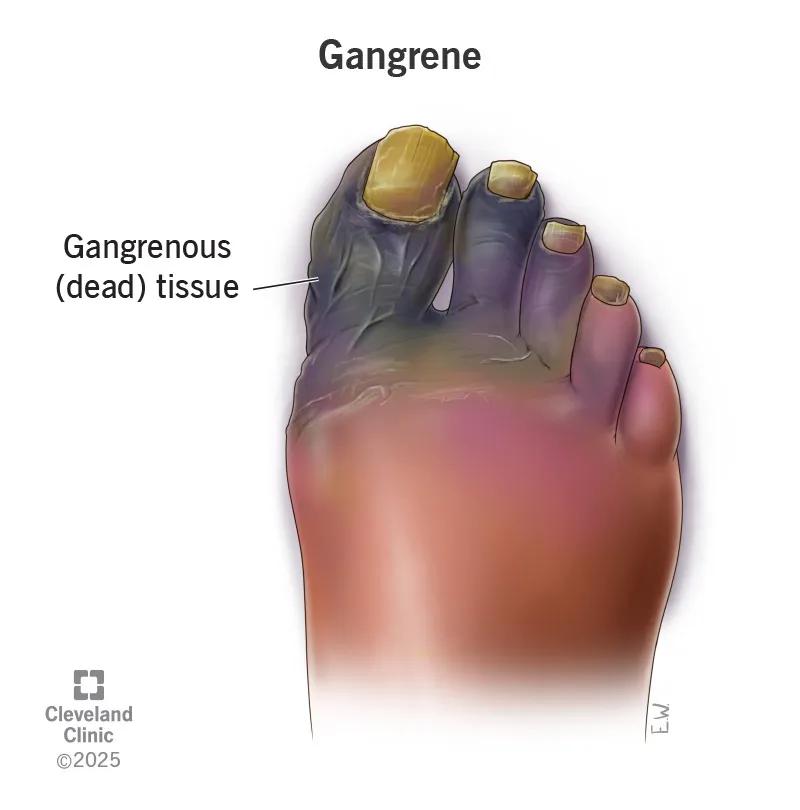
Image content: This image is available to view online.
View image online (https://assets.clevelandclinic.org/transform/449b1711-b450-4b2c-aa75-219e9c77cab9/21070-gangrene)
Gangrene is a medical emergency in which blood stops flowing to a specific part of your body, and tissues in that area die. Gangrene can develop anywhere in your body, but it often starts in a foot or hand.
Advertisement
Cleveland Clinic is a non-profit academic medical center. Advertising on our site helps support our mission. We do not endorse non-Cleveland Clinic products or services. Policy
Gangrene always involves tissue death, but it doesn’t always involve an infection. A gangrene infection means bacteria are growing in the affected area. Without prompt treatment, gangrene (with or without an infection) can lead to serious complications or death. Possible treatments include antibiotics, hyperbaric oxygen therapy, and surgery to remove dead tissue and improve blood flow to the affected body part.
The main signs of gangrene include changes to your skin color and texture. Your skin may initially turn pale before looking reddish, then brown, and then finally purple or greenish black. Your skin may also feel firm, cool and/or tender to the touch, and you may notice blisters that ooze. The affected area may be very painful or else numb.
Seek medical care immediately if you think you have gangrene. Prompt treatment, including medications and procedures, can save your limb and your life.
There are several types:
Advertisement
Gangrene symptoms vary by type and may include:
Gangrene causes skin color changes that may occur in stages:
It may be more difficult to see these color changes if you have a darker skin tone.
If there’s an infection, you’ll notice sores or blisters with smelly fluid coming out.
Lack of blood flow to a specific part of your body causes gangrene. Blood delivers oxygen, nutrients and antibodies to your tissues. When your tissues don’t receive blood, they start to die.
Causes of blocked blood flow include:
You face an increased risk of gangrene if you have a condition that affects your blood vessels. Examples include:
You also face a higher risk of gangrene if you have:
If you have any risk factors, see your provider for regular checkups and keep all your follow-up appointments. Your provider will tell you what you can do at home to lower your risk of gangrene — like taking good care of your feet and tending to wounds.
Advertisement
If you have PAD or diabetes, you can reduce your risk of developing gangrene by:
Gangrene is serious and can be life-threatening. It may lead to:
Gangrene is sometimes fatal.
See a healthcare provider right away if you think you have gangrene. They will:
Tests you may need include:
These tests help your provider learn what’s blocking blood flow, whether there’s an infection and the extent of tissue damage. All this information helps them plan treatment.
Advertisement
The goals of gangrene treatment are to:
There are several options for gangrene treatment, including medications and procedures. Your provider will choose the best method or combination of methods for you, depending on the cause of your condition and how far it has progressed.
When a bacterial infection causes gangrene, you need antibiotics. Your provider will prescribe the proper dosage for you. It’s important to take the medications exactly as prescribed and for as long as your provider says. This is necessary to clear up the infection and keep it from coming back.
“Debridement” is the medical term for dead tissue removal. Gangrenous tissue is dead, and it won’t heal. The only option is to remove it. Doing so protects nearby healthy areas and helps damaged (but not dead) tissues heal. Your provider may perform traditional surgery to remove dead or infected tissue.
Another method is larval debridement therapy, a type of biosurgery. Larval debridement therapy uses maggots bred in a lab to remove damaged tissue. Your provider places these maggots on your wound and covers the area with a bandage. The maggots feed on the dead tissue. They don’t disturb healthy tissue. They also release substances that help your skin heal. This process takes a few days.
Advertisement
If peripheral artery disease causes dry gangrene, your provider may perform a procedure to widen arteries in that area of your body. This is called an angioplasty. Your provider may also insert a stent to keep the artery propped open.
Another option is to create a new path for blood to flow around arteries that are narrowed or blocked. That’s called bypass surgery.
HBOT sends high levels of oxygen through your body’s tissues, helping to heal them. This treatment may help people who have gas gangrene or gangrene that’s due to diabetes-related foot ulcers.
Amputation is the surgical removal of the affected body part, like a toe, foot, hand or finger. Healthcare providers use this option only if other treatments won’t do enough to save healthy tissues or save your life.
After treatment to restore blood flow and remove dead or infected tissue, you may choose to have skin graft surgery. A provider uses healthy skin from another part of your body to cover scars or damaged skin.
Gangrene is serious and can be life-threatening. You need medical care right away. Call emergency services or go to your local ER if you have any gangrene symptoms, including:
You should also seek emergency help if you have symptoms of septic shock:
What you can expect, including your life expectancy, depends on many factors, including:
Your healthcare provider knows your situation best and can give you the most accurate prognosis.
Without treatment, gangrene can quickly become fatal. How long it takes for gangrene to cause death depends on the type of gangrene you have. Gas gangrene progresses very fast. The area of dead tissue can expand several inches with every hour that passes. Gas gangrene is always fatal without treatment, and sometimes fatal even with treatment.
For any type of gangrene, the sooner you get treatment, the better your chances of survival.
A gangrene diagnosis is scary, whether it happens to you or a loved one. As with any diagnosis, remember that knowledge can give you power. Learn as much as you can about the condition and treatment options. Prompt treatment greatly improves your chances of survival.



Sign up for our Health Essentials emails for expert guidance on nutrition, fitness, sleep, skin care and more.
Learn more about the Health Library and our editorial process.
Cleveland Clinic’s health articles are based on evidence-backed information and review by medical professionals to ensure accuracy, reliability and up-to-date clinical standards.
Cleveland Clinic’s health articles are based on evidence-backed information and review by medical professionals to ensure accuracy, reliability and up-to-date clinical standards.
Whether you need stitches, a broken bone set or think your appendix might be causing your abdominal pain, Cleveland Clinic’s emergency medicine team is here to help.
